Before changing a coffee recipe, decide what result would justify the change. Use coded cups to find out whether customers can tell the old and new drinks apart. Ask a separate group to rate liking if the decision depends on preference. Change the wording while holding the brew constant if the problem may be on the bag.
The distinction matters when a buyer says a proposed coffee tastes sharper. A change in the bean, roast or brew can affect the cup. So can a description that leads the buyer to expect a sharper taste. Changing the brew and label together leaves the cause unclear.
A description can change what people expect to taste
In a study of reduced-sugar tropical fruit drinks published on 22 October 2026, Duong Hong Luan and Vo Trieu Tra compared claims shown before tasting. After quality checks, 273 people contributed ratings across three products, for 819 person-by-product observations. Claims changed what people expected about attributes such as sweetness and fruit aroma. According to the publisher abstract, the drink served had a stronger relationship with what people reported after tasting and how much they liked it. The abstract gives no sales outcomes.
Suppose buyers expect a sweeter cup because of a phrase on the bag. If they already like the coffee, test a phrase that sets a closer expectation. If they give the coffee low scores whatever the bag says, ask the roaster to inspect the recipe before ordering new labels.
One coffee received three acidity ratings
Fabiana Carvalho and colleagues tested the wording directly in a 2026 study in São Paulo, Brazil. The 180 participants had bought and drunk specialty coffee for at least a year. Each person saw three bags in a balanced order. The bags shared a design and the coffee came from one lot. One label gave no processing information, one said fermentation, and one said carbonic maceration. The authors describe carbonic maceration as the less specific descriptor in this experiment.
Each taster looked at the bag, tried the coffee and rated its acidity. Figure 2B and Table 1 give mean acidity of 4.6 out of 10 for the label without a processing term, 6.3 for fermentation and 4.9 for carbonic maceration. The numbers describe how acidic the brew seemed, while the drink stayed the same. Everyone saw packaging, even when the bag gave no process term.
The same paper asked people about price in a separate questionnaire. Processing information mattered to 121 of the 180 participants (67.2%). In that group, 34.7% chose carbonic maceration as the most expensive process and 65.3% chose the natural process as the least expensive. The authors showed a list of five process terms. These were judgements about price, without a price offer or a purchase.
Keep the origin line fixed in a Valdesia coffee test
A roaster buying from the Valdesia area in the Dominican Republic might need to switch a lot while keeping a familiar coffee on the shelf. The British register’s Café de Valdesia entry lists the protected origin name. The linked Valdesia product specification lists 10% to 11.5% moisture for green coffee under its certification criteria. Record each lot’s measured moisture before the tasting so that a failed supplier specification stays separate from a low liking score. Use the current lot’s documentation to confirm which name can appear. Keep that line unchanged when the variable under study is a truthful flavour description.
Start with people who buy the product the roaster plans to change. A supermarket customer who brews at home and a café customer ordering prepared coffee meet the product under different conditions. A Caribbean roaster selling ground coffee for home use could recruit the first group for this decision. If the team also wants a café result, record it separately and plan the serving conditions with that outlet.
Adrian Dunkley’s People First, Problem Second, AI Last method starts with the buyer’s need and the decision the team must make. Here the team can log the reason a repeat customer gave for choosing the coffee. An AI tool can help a Caribbean roaster organise voluntary comments by topic after an editor checks them against the record. Use the tasting responses, rather than the tool’s summary, when deciding whether people detected a recipe change.

Write the test before buying the next lot
Use a triangle test when the roaster needs to know whether two homogeneous preparations are distinguishable. Serve two coded cups of one brew and one of the other. A person who guesses at random has a 33.3% chance of choosing the different cup. The ISO public summary specifies a forced choice. It also explains that a result cannot name the sensory attribute responsible. A specialist sets the sample and decision rule in advance.
In a 2024 conference pilot with 42 untrained attendees in Mannheim, Germany, 71% correctly identified the different sample when the team compared two post-roast resting periods. The experiment used coffee from one harvest. It shows why a roaster should record rest time. The percentage describes those attendees and samples.
- Ask the production manager and buyer to name the current lot, the replacement and the customers who might notice a change. Give one person authority to delay the switch. Specify in the brief which result allows the decision to move forward.
- Compare coded cups after a sensory specialist confirms that the brews suit a triangle test and sets the sample plan. Use identical cups and standardise the water, dose, grind and serving temperature. Keep the code key away from participants. Spread the possible serving orders across sessions.
- Test 3 serving sequences by next Friday in a staff rehearsal. Check whether the server follows the order, hides the labels and records the chosen cup. Count missing choices and code errors, then fix them before you invite customers.
- Set a separate liking test if customers can tell the cups apart. Check whether the new cup meets the liking requirement. When the cup meets that requirement, show different accurate flavour descriptions with identical coffee. Write down the action that each result would change.
A separate purchase pilot can answer the price question for a Caribbean retailer. Give people the intended purchase price, the choice to decline and stock they can buy. Report how many people had that opportunity and how many bought. Track who was invited through which outlet. Store the test brief with the results so the next team can trace why the decision was made.
Plan for a difference your test could miss
A weak test can leave a producer confident about a change some buyers will notice. Before inviting anyone, ask which difference would matter to the buyer and how many tasters could detect it with enough certainty to guide the switch. The triangle method has limits when a flavour lingers into the next sample. Ask a specialist to check how you serve the cups and how participants rinse between tastes. Explain the ingredient and caffeine screening process and accept a participant’s decision to stop without penalty.
The São Paulo study involved one coffee and regular specialty buyers. The study gives a Caribbean team a reason to test its label locally. To find out how a description in Dominican Spanish shapes ratings at a particular outlet, ask the people who shop there. Check the words customers use themselves before selecting the alternatives.
Questions before the first tasting
Can a trained panel choose the retail winner?
Use a trained panel to identify which sensory attributes changed. Ask target consumers how much they liked each cup. When the panel detects more acidity and consumers give the new cup higher ratings, keep both findings in the record. More acidity can suit some buyers.
When should we repeat the tasting on a second day?
Schedule a second day when production or preparation varies enough to affect the decision. Keep the written recipe and serving conditions the same. Compare results by day first. A single average could hide a day when a new preparation lost its advantage.
How should we handle the switch between lots?
Record each lot’s roast date and prepare both at the same planned point after roasting where feasible. Log time since opening the bag as well. A fresh batch beside a bag that sat open can make a storage difference look like a supplier difference.
What should go into the results sheet?
Keep the sample code, serving order, response and reason for any missing entry together. Record protocol deviations, such as a cup served cold, before revealing the key. Use a coded participant identifier and restrict access to identifying details.
Sources and research status
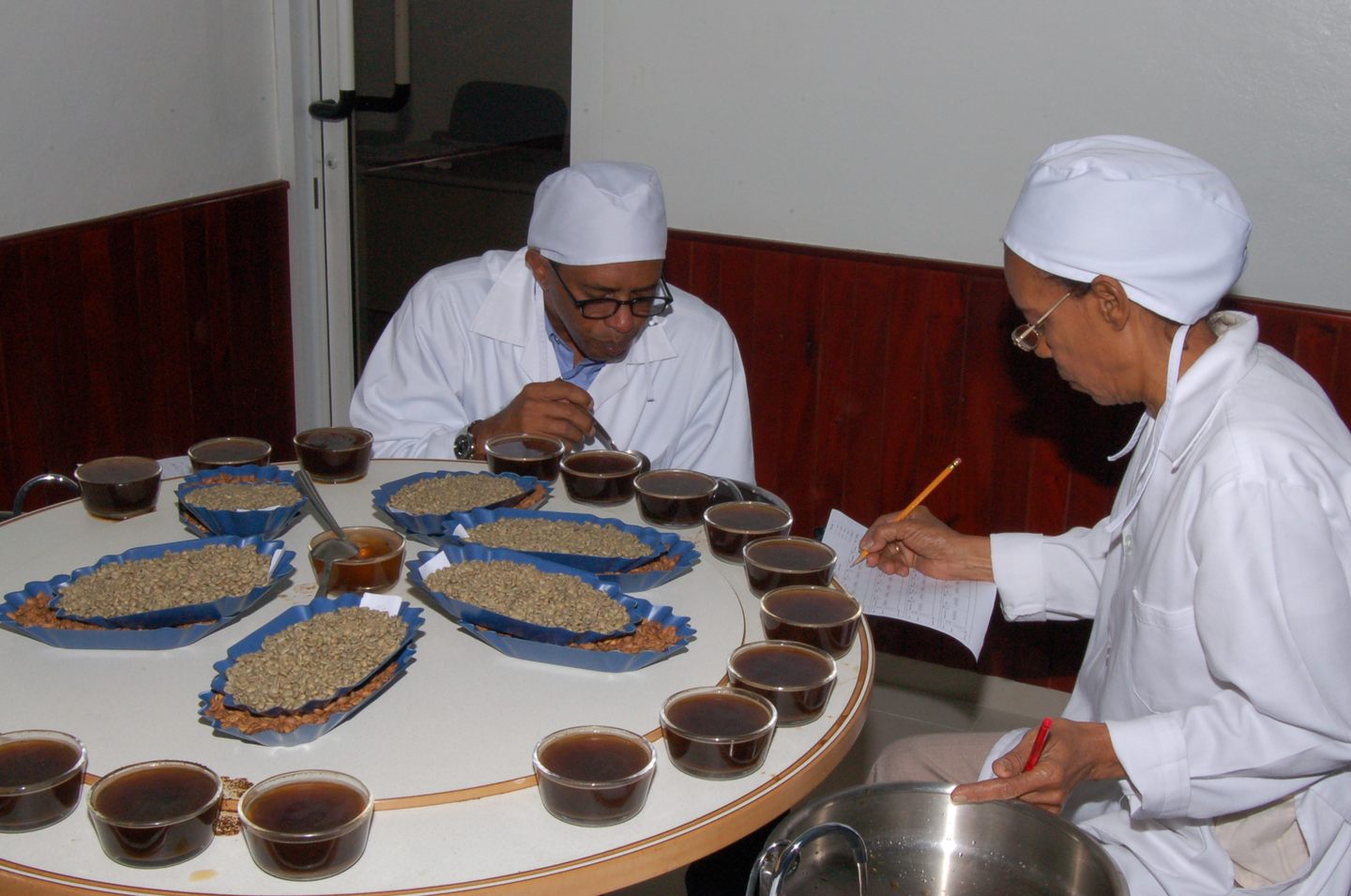
The article draws on public research and proposes a test for a coffee product team. Orbital has no customer or sales results from this proposed test to report. The photographs document the Dominican coffee sector independently of the studies and show no participant in either cited experiment.
- Carvalho, de Sousa and Nadaleti (2026), specialty coffee labels and sensory judgements. Methods, results, Figure 2B and Table 1.
- Luan and Tra (2026), sensory claims and reduced-sugar beverages. Published abstract and supporting-material index.
- World Intellectual Property Organization’s 2010 record. Dominican recognition of the Valdesia origin.
- ISO 4120:2021 and ISO 11136:2014. Public summaries of discrimination and liking methods.
For related methods, read Orbital’s guide to attention, preference and purchase, Adrian Dunkley’s research and writing and the Kill My Startup project for testing a business assumption.